




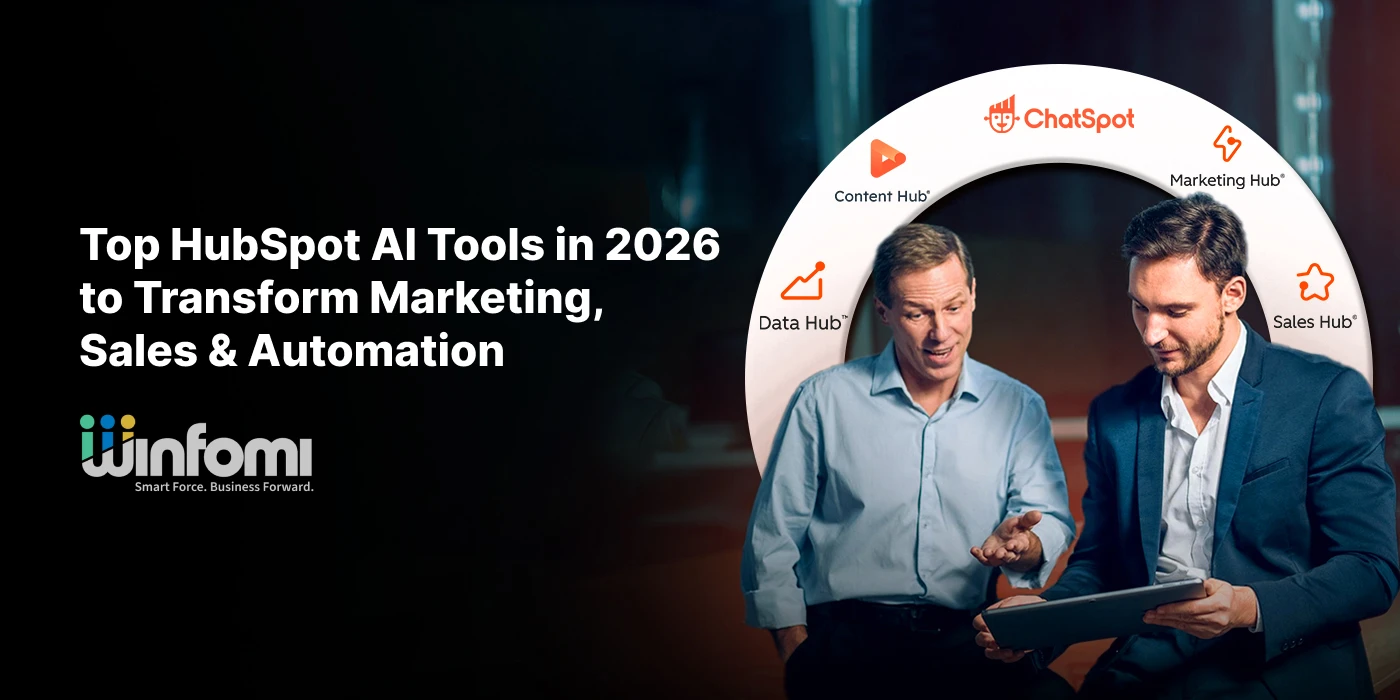




Top HubSpot AI Tools in 2026 to Transform Marketing, Sales & Automation
If you’re getting impressions for HubSpot CRM but struggling with low CTR, the issue isn’t visibility — it’s engagement.
In 2026, businesses that win clicks and conversions are using AI-powered tools inside HubSpot to create smarter campaigns, personalize outreach, and convert leads faster.
This blog breaks down the top HubSpot AI tools you should be using right now — not just for automation, but for real lead generation impact.
Why HubSpot AI Tools Matter in 2026
Modern businesses need more than just automation — they need intelligent automation.
HubSpot AI tools help you:
- Create content faster with better relevance
- Identify high-quality leads instantly
- Automate repetitive workflows
- Improve campaign performance with data insights
These tools are designed to save time, improve accuracy, and drive measurable growth.
Top HubSpot AI Tools in 2026
1. AI Content Assistant


The AI Content Assistant is one of the most widely used tools in HubSpot. It enables users to generate:
- Blog posts
- Marketing emails
- Landing page content
- Social media captions
Key Benefits:
- Faster content creation
- Improved messaging quality
- Consistent brand voice
This tool is ideal for marketing teams looking to scale content without compromising quality.
2. ChatSpot AI (Conversational CRM)

ChatSpot is a conversational AI assistant that allows users to interact with their CRM using natural language.
What you can do:
- Generate reports instantly
- Retrieve CRM data
- Create marketing campaigns
- Automate workflows
Why it stands out:
It simplifies complex CRM tasks into simple conversations, making data more accessible.
3. Predictive Lead Scoring

Predictive lead scoring uses AI to analyze user behavior and assign scores based on conversion probability.
Key Benefits:
- Prioritize high-value leads
- Improve sales efficiency
- Increase conversion rates
This tool helps sales teams focus on leads that matter most.
4. AI Email Optimization
HubSpot AI enhances email marketing by optimizing:
- Subject lines
- Send timing
- Personalization
Key Benefits:
- Higher open rates
- Better engagement
- Data-driven email strategies
5. AI-Powered Analytics & Reporting

This feature uses AI to analyze campaign performance and generate actionable insights.
Key Benefits:
- Real-time performance tracking
- Automated insights
- Smarter decision-making
It helps businesses quickly understand what’s working and what needs improvement.
6. AI Workflow Automation
AI-powered workflows automate repetitive tasks across marketing and sales.
Examples:
- Lead nurturing sequences
- Follow-up emails
- Task automation
Key Benefits:
- Saves time
- Reduces manual work
- Ensures consistent engagement
7. AI-Powered Content Personalization
HubSpot AI allows businesses to deliver personalized experiences based on user behavior and preferences.
Key Benefits:
- Higher engagement
- Improved user experience
- Better conversion rates
How to Choose the Right HubSpot AI Tools
Not every tool is required for every business. Here’s how to choose:
- For Marketing Teams: AI Content Assistant, Email Optimization
- For Sales Teams: Predictive Lead Scoring, ChatSpot
- For Operations: Workflow Automation, Analytics
Start with one or two tools and scale based on your business goals.
Best Practices for Using HubSpot AI
To get the most out of HubSpot AI:
- Combine AI with human strategy
- Continuously test and optimize campaigns
- Use data insights to refine decisions
- Align marketing and sales teams
AI works best when it complements your overall business strategy.
Conclusion
AI is no longer optional — it’s a core part of modern business strategy. With tools like AI Content Assistant, ChatSpot, and predictive analytics, HubSpot CRM empowers businesses to work smarter, not harder.
By leveraging these AI tools, organizations can streamline operations, improve customer experiences, and drive sustainable growth in 2026 and beyond.