





Share:



Table Of Contents
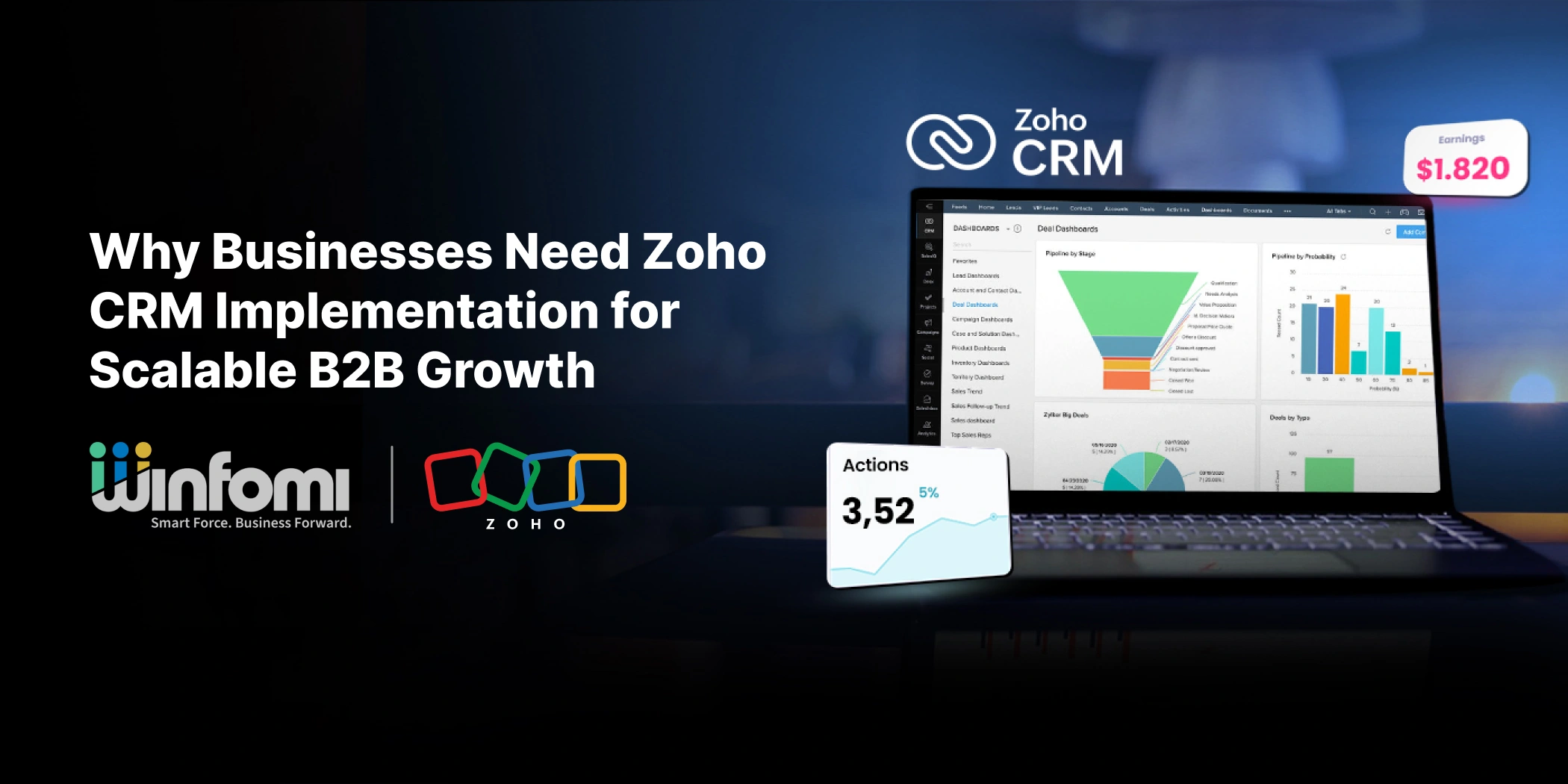
Why Businesses Need Zoho CRM Implementation for Scalable B2B Growth
B2B businesses today are handling more customer interactions, longer sales cycles, and increasing operational complexity than ever before. As organizations grow, managing leads, sales pipelines, customer communication, and follow-ups manually becomes inefficient and difficult to scale.
Many businesses still rely on spreadsheets, disconnected applications, and manual workflows to manage customer relationships. Over time, this creates challenges such as delayed responses, poor lead tracking, inconsistent communication, and missed revenue opportunities.
To solve these challenges, businesses are investing in CRM platforms that centralize customer data, automate processes, and improve sales efficiency. Among the leading CRM solutions available today, Zoho CRM has become a preferred platform for businesses looking for flexibility, automation, and long-term scalability.
What is Zoho CRM Implementation?
Zoho CRM implementation is the process of configuring, customizing, and deploying Zoho CRM based on a company’s business operations, sales processes, and customer management requirements.
Zoho CRM implementation typically includes,
- CRM setup and configuration
- Sales pipeline creation
- Lead management workflows
- Automation rules
- Custom modules and fields
- Third-party integrations
- Data migration
- User access management
- Reporting dashboards
- Employee training
Businesses that invest in structured CRM implementation often experience improved productivity, better lead management, and stronger customer engagement.
Free Zoho CRM SetupWhy Businesses Need Zoho CRM Implementation
Even with the right tools, many organizations fail due to execution gaps. Here are key mistakes to avoid:
1. Centralized Customer Data Management
One of the biggest challenges for growing businesses is scattered customer information.
Sales data often exists across spreadsheets, emails, WhatsApp conversations, marketing tools, and multiple software platforms. This creates confusion and reduces visibility across teams.
Zoho CRM implementation helps businesses centralize:
- Leads
- Contacts
- Accounts
- Sales activities
- Customer interactions
- Deal pipelines
With all customer information available in a single platform, teams can work more efficiently and make informed business decisions.
2. Improved Lead Management
Lead generation is only effective when businesses can manage and convert leads efficiently.
Without a CRM system, leads are often missed, delayed, or poorly tracked.
Zoho CRM implementation helps businesses:
- Capture leads automatically
- Assign leads to sales representatives
- Track lead stages
- Score leads based on engagement
- Automate follow-ups
- Monitor conversion activities
This improves response times and increases conversion opportunities for B2B sales teams.
3. Sales Workflow Automation
Manual processes slow down business growth.
Sales teams spend significant time handling repetitive tasks such as:
- Sending follow-up emails
- Updating deal stages
- Creating tasks
- Scheduling reminders
- Assigning leads
Zoho CRM automation helps streamline these processes using workflow rules, blueprints, and process automation tools.
With proper Zoho CRM implementation, businesses can automate repetitive operations and allow teams to focus more on customer engagement and revenue generation.
Zoho CRM Free Trail4. Better Sales Pipeline Visibility
B2B sales cycles involve multiple touchpoints, stakeholders, and decision-making stages.
Without structured pipeline management, businesses struggle to forecast revenue and identify bottlenecks.
Zoho CRM implementation enables organizations to:
- Track deals in real time
- Monitor pipeline stages
- Analyze sales performance
- Forecast revenue
- Identify stalled opportunities
This gives sales managers better visibility into business performance and helps improve sales strategies.
5. Personalized Customer Engagement
Modern B2B buyers expect personalized interactions throughout the customer journey.
Zoho CRM helps businesses create tailored communication based on:
- Customer behavior
- Purchase history
- Lead activity
- Engagement patterns
- Industry segments
With proper implementation, businesses can automate personalized emails, reminders, and engagement workflows to improve customer relationships.
6. Zoho CRM Integration with Business Applications
Most businesses use multiple platforms for operations, marketing, accounting, support, and communication.
Zoho CRM integration helps connect CRM with:
- ERP systems
- Accounting software
- WhatsApp messaging platforms
- Email marketing tools
- Customer support applications
- E-commerce platforms
- Third-party APIs
Integrated systems improve operational efficiency and reduce manual data entry.
7. Scalable CRM Infrastructure for Business Growth
As businesses grow, operational requirements also evolve.
Zoho CRM provides scalable infrastructure that supports business expansion without requiring complex system migrations.
Businesses can extend their CRM ecosystem with:
- Zoho Books
- Zoho Desk
- Zoho Campaigns
- Zoho Analytics
- Zoho Projects
- Zoho Creator
- Zoho Marketing Automation
This allows organizations to build a connected business environment within the Zoho ecosystem.
Why Businesses Work with a Zoho CRM Implementation Partner
CRM implementation requires technical expertise, workflow planning, and business process understanding.
Working with a Zoho CRM implementation partner helps businesses avoid configuration errors and maximize CRM performance.
A Zoho partner can help with:
- CRM consulting
- Workflow design
- Customization
- Automation setup
- API integrations
- Data migration
- User onboarding
- Ongoing CRM optimization
An experienced Zoho CRM partner ensures the platform is aligned with business goals and operational workflows.
Common Challenges Solved by Zoho CRM Implementation
Businesses often face operational challenges such as:
Poor Lead Tracking
Zoho CRM centralizes lead management and automates lead assignments.
Manual Sales Operations
Automation reduces repetitive tasks and improves productivity.
Lack of Reporting Visibility
Custom dashboards and analytics provide real-time business insights.
Communication Gaps
Teams can access shared customer information from one platform.
Disconnected Systems
Integrations help connect sales, support, finance, and marketing operations.
Best Practices for Successful Zoho CRM Implementation
Define Clear Business Goals
Identify operational pain points and CRM objectives before implementation.
Automate Repetitive Processes
Use workflow automation to improve efficiency.
Customize CRM Based on Business Needs
Avoid generic CRM configurations.
Train Teams Properly
User adoption is essential for CRM success.
Continuously Optimize Workflows
CRM processes should evolve as the business grows.
Conclusion:
Zoho CRM implementation is no longer optional for businesses looking to scale B2B operations efficiently.
From lead management and workflow automation to reporting and customer engagement, Zoho CRM helps businesses streamline operations and improve sales performance.
Businesses that invest in structured Zoho CRM implementation can improve operational efficiency, enhance customer experiences, and build scalable sales processes for long-term growth. Working with an experienced Zoho CRM implementation partner further helps organizations maximize CRM capabilities and achieve better business outcomes.
Need help with Zoho CRM setup, customization, or automation?
Our Zoho CRM consultants can help you optimize your business workflows and accelerate growth.